TIMELINE
1963
- The Friern Barnet Sewage works at Pinkham Way close in 1963. All buildings are demolished.
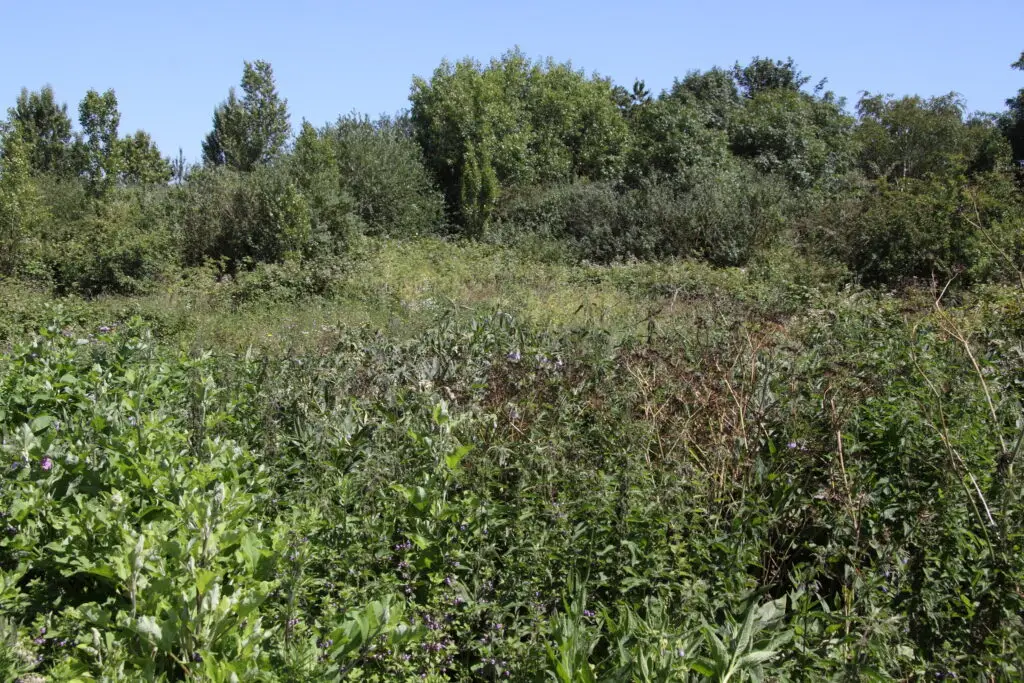
- Nature completely reclaims the land and for decades, local residents use it as their open space.
2009
- In November 2009 the North London Waste Authority (NLWA) secretly negotiates to buy the majority of the Sewage works site from Barnet Council.
- Barnet Council retains a portion of the site.
2011
- In February the NLWA announces a proposal to build a huge waste plant at Pinkham Way to treat 300,000 tons of black bag waste per year. It buys the site without planning permission.
- The purchase and proposal are integral parts of a long-planned multi-billion-pound waste contract procurement to handle the waste of seven North London boroughs for up to 30 years.
- Barnet Council plans to move its entire fleet of bin lorries to the Pinkham Way site.
- There is public outrage at the secrecy surrounding such a major project which is presented by the NLWA as a fait-accompli.
- Proposals raise concerns about increased traffic, air pollution and environmental destruction.
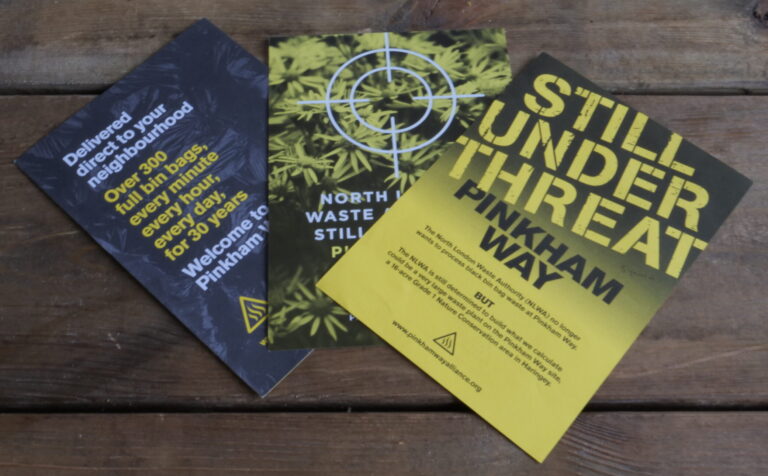
- March 2011 the Pinkham Way Alliance (PWA) is formed.
- June 2011 Pinkham Way Alliance participates in Haringey Council Local Plan hearings in front of an Independent Planning Inspector.
- The Inspector throws out Haringey Council proposals for lack of evidence, clarity and competence. A first critical victory for the Pinkham Way Alliance.
- June 2011 PWA makes submissions to the North London Waste Plan, ahead of public hearings.
2012
- June 2012 public hearings for the North London Waste Plan finally take place. The Inspector suspends proceedings after 90 minutes having judged the plan illegal.
- Pinkham Way Alliance campaigns vigorously against the NLWA procurement, arguing that it will tie local authorities in to providing high levels of black bin waste for many years when waste is steadily falling due to recycling.
- In November the NLWA abandons the waste plant proposals for Pinkham Way as the plant is no longer required.

2013
- In September the NLWA abandons its costly procurement plan, of which the Pinkham Way project has been an integral part.
- PWA commissions an ecological study of the site. This confirms it is a Grade 1 SINC (Site of Importance for Nature Conservation). This conclusion is validated by Haringey Council’s own survey.
2014
- PWA commissions a site management plan to demonstrate how the nature site could potentially be restored and managed by local volunteers as a nature reserve.
2016
- PWA submits responses to Haringey Council’s Local Plan and participates in public hearings.
- The Inspector accepts the bulk of PWA arguments and rejects Haringey Council’s arguments as unsound. A second major achievement for PWA.
2019
- At the public hearings for the North London Waste Plan (2nd version), PWA argues that as an important nature conservation site, Pinkham Way has no place in the plan.
- At the conclusion of the hearings, the Inspector told the councils that the waste plan was ‘unsound’.
- He gave them two choices: they could redraft the waste plan – for the third time – or ask him to redraft the unsound sections (they chose the latter).
- His Report, published in late 2021, fundamentally redrafted the unsound aspects of the plan including the site assessment and accompanying arguments relating to Pinkham Way.
- As far as PWA is concerned, it’s the most important document since the campaign began in 2011 and provides the basis for the campaign’s future direction.